
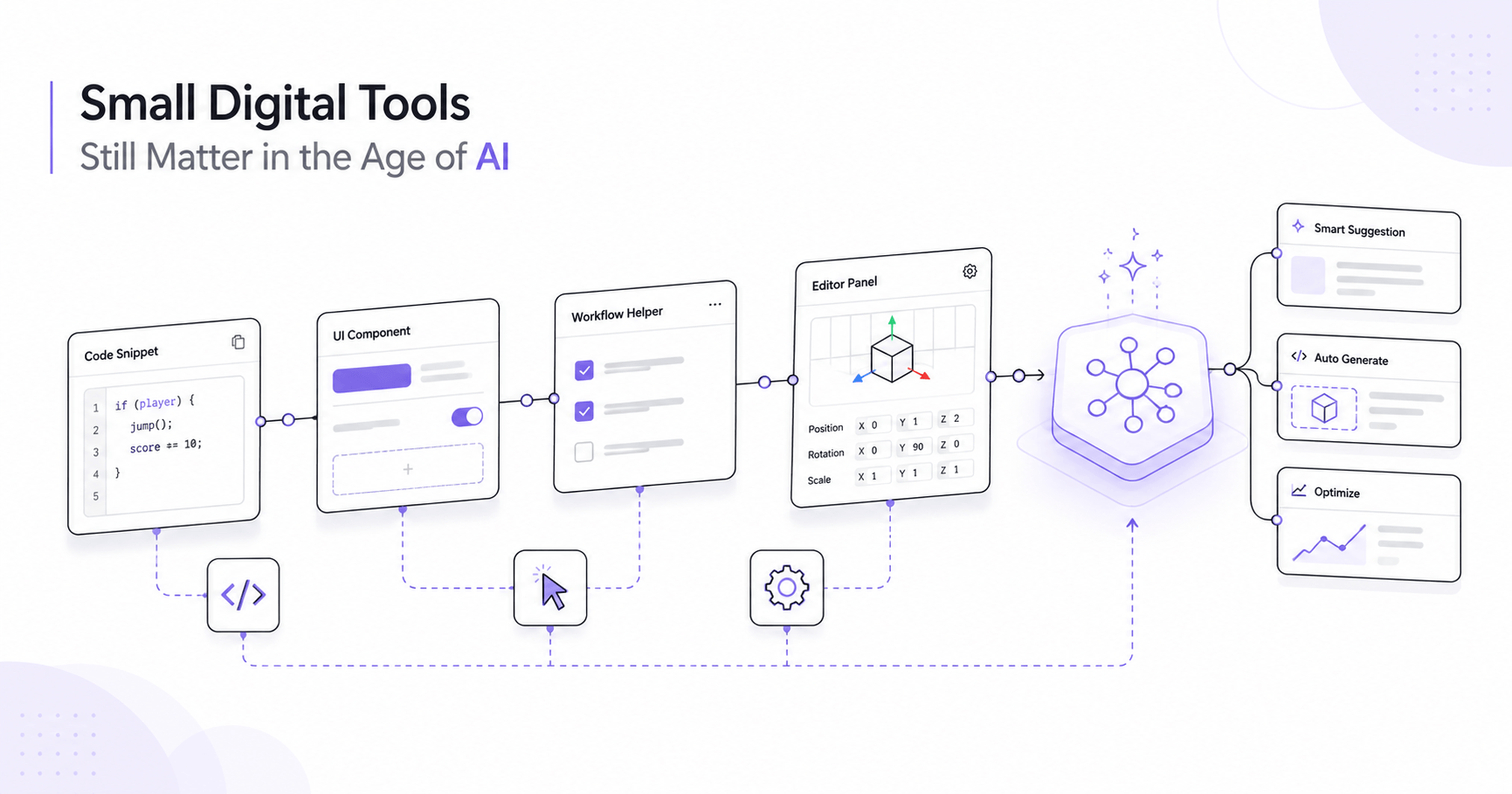
What this article covers
- AI is powerful, but people still need simple workflows
- The best tools remove tiny frustrations
- Small digital tools are easier to trust
- AI creates more need for better tools, not less
AI is everywhere now.
It writes text, generates images, explains code, summarizes documents, creates marketing ideas, helps with customer support, and even builds parts of websites. For many creators, developers, and small business owners, it feels like every week brings a new tool that promises to do everything.
And because of that, a fair question comes up:
Do small digital tools still matter?
Do we still need plugins, workflow helpers, editor extensions, small utilities, and focused software products when AI can already do so much?
I think the answer is yes — and not just yes, but maybe now more than ever.
Because the real value of a good digital tool was never about doing everything. It was always about solving one specific problem clearly, reliably, and without making the user stop and think. That still matters. In fact, in the age of AI, that kind of clarity might be exactly what people need most.
AI is powerful, but people still need simple workflows
AI can help with a lot of things, but AI is not a workflow.
There is a real difference between asking a chatbot for help and having a tool that simply gets the job done every time without asking questions.
A business owner might ask AI how to write a product description. That is helpful. But if they need to create hundreds of product drafts, organize fields, prepare SEO text, and keep everything consistent, they do not want to repeat the same prompt all day. They want a workflow.
A designer might ask AI how to improve a section of a website. Useful. But if they need to apply the same kind of structure across twenty pages, they need something repeatable, not something they have to renegotiate every time.
A developer might ask AI to generate code. That can save time. But if they need to store snippets, reuse them, sync them, manage versions, or avoid pasting the same block again and again, they need a tool.
AI can suggest. A tool can execute.
AI can explain. A tool can organize.
AI can create. A tool can make the process repeatable.
That is why small tools are still important.
The best tools remove tiny frustrations
Not every useful product needs to be huge.
Some of the best tools in the world solve small, annoying problems. A button that saves five minutes. A panel that keeps things organized. A plugin that removes a repetitive task. A template that prevents confusion. A small workflow that makes someone feel in control again.
These things may not sound dramatic, but they matter.
Most people are not looking for software that changes their entire life. They are looking for something that makes today’s work a little easier.
A good tool does not always need to be impressive. It needs to be useful. That is a simple idea, but it is easy to forget.
Many products become complicated because they try to look bigger than they need to be — too many screens, too many settings, too many options. But the user often just wants one thing: help me finish this faster.
That is exactly where small digital tools can win.
Small digital tools are easier to trust
Trust is becoming more important in software.
When a tool tries to do everything, users become cautious. They wonder what it has access to, what it changes, what it stores, and what happens if something goes wrong.
A smaller tool is easier to understand. If a plugin has one clear job, the user can quickly decide whether they need it. If a Unity editor tool helps with one part of the workflow, the creator can test it, understand its value, and move on. If a small utility saves time without taking over the whole project, it feels safe.
That matters — especially for independent creators and small teams who cannot afford to troubleshoot things going wrong.
A focused tool is easier to explain, easier to support, easier to improve, and easier for users to recommend.
AI creates more need for better tools, not less
At first, it might seem like AI will remove the need for many tools. But in practice, AI often creates more work around organization.
People can now generate more ideas, more drafts, more images, more code, and more content than ever before. That sounds great — but it also creates a new problem: what do we do with all of it?
More output means more need for structure.
Someone still needs to review, edit, publish, organize, format, store, reuse, compare, and manage the results. That is where tools become valuable.
A creator does not only need AI to generate something. They need a practical path from idea to finished result. A business does not only need content — it needs content in the right place, with the right fields, the right style, and the right workflow.
AI increases speed. Tools create order. Both can work together.
A useful tool respects the user’s time
One of the biggest signs of a good tool is respect — for the user’s time, their attention, their experience level, and the fact that they may be tired, busy, or not very technical.
Good tools should not make users feel lost. They should make users feel capable.
That is one of the reasons small, focused tools can be powerful. They guide the user through a specific task without overwhelming them. Simple does not mean weak. Simple means thoughtful.
The future belongs to practical software
There will always be room for big platforms. But there is also a strong future for practical, focused software.
Tools that help creators publish faster. Tools that help developers avoid repetitive work. Tools that help small businesses organize their workflows. Tools that help website owners do things themselves, without hiring someone for every small task. Tools that turn confusing processes into simple steps.
A small tool that saves one hour every week can quietly become part of someone’s routine. A plugin that removes one painful task can stay installed for years. An editor extension that makes a creative process easier can become part of how someone builds every project.
That is not a small thing.
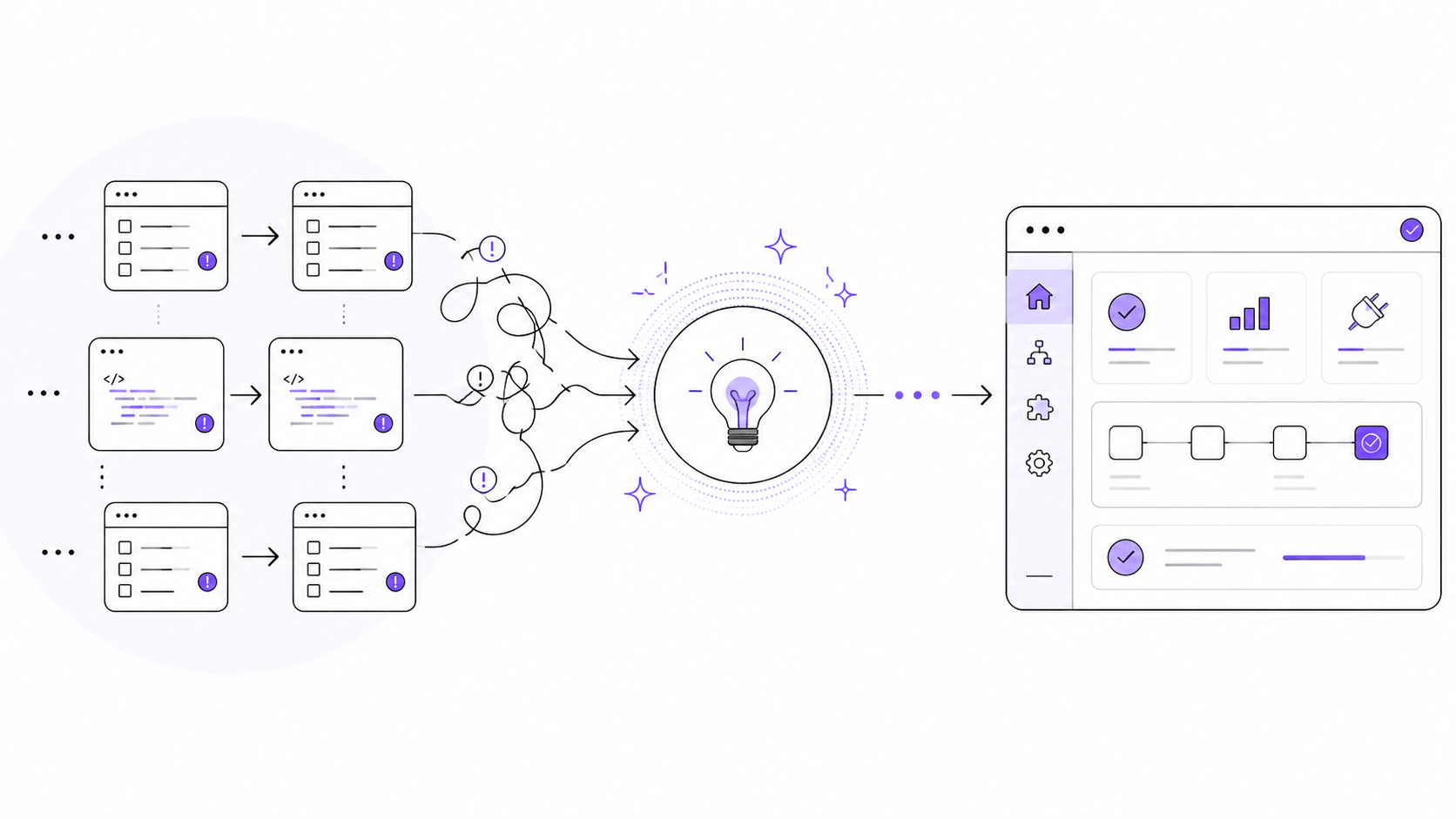
The best product ideas often come from repeated pain
If you want to build a useful tool, look for repeated pain.
Not a random inconvenience. Not a trendy idea. Not something that only sounds good in a headline.
Look for a task people repeat again and again — copying the same code between projects, creating similar product content many times, formatting the same type of page repeatedly, setting up the same workflow for every client, or switching between tools just to finish one simple job.
Repeated pain is a signal. It means there may be room for a tool.
The tool does not need to be huge at first. It just needs to reduce the friction. A good first version can be simple if it solves the core problem well.
Useful beats impressive
Impressive products get attention. Useful products get used.
A product can have a beautiful landing page and a long list of features — but if the user opens it and does not quickly understand how it helps, they will leave.
On the other hand, a small tool with a clear purpose can quietly become valuable. The user may not talk about it every day. They may not even think about it much. But they keep using it because it works.
That is a good kind of success.
AI does not remove the need for craft
AI can generate a lot, but craft still matters. Taste matters. Product thinking matters. Good interface design matters. Understanding the user matters. Naming things clearly matters. Choosing what not to include matters.
A tool is not only a collection of features. It is a decision about how a task should feel — fast or safe, beginner-friendly or professional, guided or open-ended.
These decisions are human. AI can help during the process, but someone still has to care about the final experience. That care is what makes a tool feel good.
Small tools can build strong brands
A brand does not always start with a huge product. Sometimes it starts with one useful tool. Then another. Then another.
Over time, people begin to understand what the brand stands for — clean workflows, practical creator tools, simple software that removes annoying work. The important thing is consistency.
If every tool respects the user, solves a real problem, and feels polished, the brand becomes easier to trust. That is how small products can become something bigger. Not through noise, but through usefulness.
Final thought
The age of AI does not make small digital tools irrelevant. It makes clarity more valuable.
People have more options than ever, but they still need software that helps them move from idea to result — tools that save time, reduce confusion, and make real work easier.
A good small tool does not need to compete with AI. It can work beside it.
AI can help people think, generate, and explore. Focused tools can help them organize, apply, publish, and repeat.
That combination is powerful. And for creators, developers, and small businesses, it may be one of the most practical directions for the future.
Build small. Solve clearly. Respect the user’s time.
That still matters.
Explore more tools and guides from Clugins
If you enjoy practical software ideas, creator workflows, WordPress tools, and Unity productivity tools, you can explore the Clugins docs or see what we are building next.